ASPHER Core Curriculum Programme

ASPHER has a long history, originally the organisation began operations in 1968 under the name AIRESSPE - Association des Institutions Responsable pour l’Enseignement Supérieur de la Santé Publique en Europe (Association of Responsible Institutions for Higher Public Health Education in Europe). This came to action after the regional office of the WHO for Europe under Dr. L. Kapiro held discussion during 1966 and 1967 with leading figures of schools of public health, including schools of tropical hygiene, as part of a world-wide initiative to set up regional associations of Schools in every WHO Region as channels for initiating innovation (Landheer & Macara. 1993).
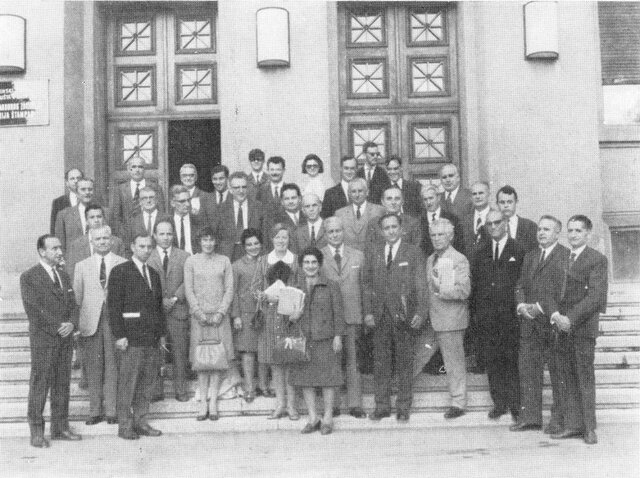
ASPHER's First General Assembly 1968, Zagreb, Croatia (J.Bozikov, 2016)
Innovation in 1968 and now in 2020’s relies on the same principle, to ensure that the next generation of public health professionals are ready to tackle the ever-changing picture of the public’s health, which in some eyes represents a historical fingerprint of missed opportunities for public health involvement for the betterment of our populations.
Development of core public health competencies has been a common theme within ASPHER’s operations since 2006. ASPHER’s Core Competencies Programme (CCP), has historically been led by ASPHER Past President, Professor Anders Foldspang of Arhus University, Denmark and Dr. Christopher A. Birt of University of Liverpool, England (Foldspang. 2007).
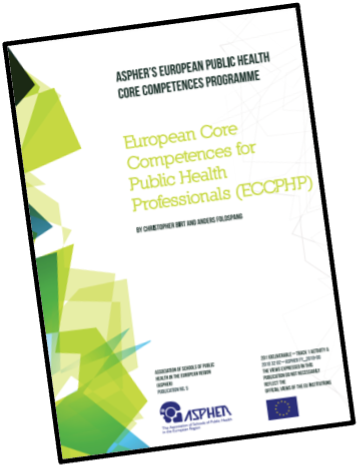
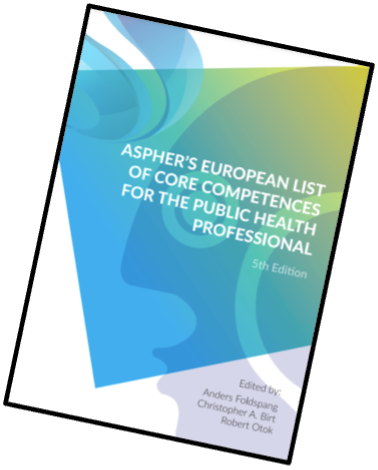
2011 ECCPHP & 2018 CCPHP
Started in 2006, ASPHER’s European Programme on Public Health Core Competences has involved more than hundred European public health teachers, scientists and practitioners in the development of lists of competences for public health professionals. In the first round, all ASPHER member schools were invited to contribute to six workgroups, which lead to the first list of competences (Foldspang. 2007). Thereafter, European ministries of health were invited to participate, among other things in a conference at Aarhus University in April 2008, where, in the end, 27 European countries were represented, by decision makers and by teachers and scientists. At the same time the first two in a series of national practitioner-teacher workshops were performed, in Slovenia and Scotland, respectively (Whittaker et al. 2010). This all led to the second, enlarged list of competences (Foldspang. 2008), which was presented in October 2008 at a second European conference in Paris, as part of France’s EU Presidency that year
Since its inception the ASPHER CCP have spearheaded the important process of developing five separate editions which have been published from 2007 to 2018 (ASPHER, 2018). Previous lists have been a useful practical resource book providing detailed content for public health teaching and curriculum for our member schools of public health but mostly of use for public health professionals whom need to keep in line with their professional competence.
References:
Foldspang A (Ed.). Provisional Lists of Public Health Core Competencies. European Public Health Core Competencies Programme (EPHCC) for Public Health Education. Phase 1. ASPHER Series No. 2. Brussels: ASPHER, 2007.
Whittaker PJ, Pegorie M, Read D, Birt C, Foldspang A. Do academic competences relate to ‘real public health practice’? A report from two exploratory workshops. Eur J Public Health 2010;20:8-9. Link
Foldspang A (Ed.). Provisional lists of public health core competencies. European Public Heath Core Competencies Programme (EPHCC) for Public Health Education. Phase 2. ASPHER Series No. 4. Brussels: ASPHER, 2008.
ASPHER. (2018), “Aspher’s European List of Core Competences for the Public Health Professional." Scandinavian Journal of Public Health 46, no. 23_suppl (2018): 1-52. https://doi.org/10.1177/1403494818797072. Accessed on 02Dec2022; Available from: https://journals.sagepub.com/doi/epub/10.1177/1403494818797072
Landheer T, Macara AW. (1993), “The History of ASPHER, 1968-1993", Accessed on 05Dec2022; Available from: https://aspher.org/repository,6,0,24.html
Bozikov J. Half century of the Association of Schools of Public Health in the European Region: A significant contribution to public health education (Editorial). SEEJPH 2016, posted: 23 April 2016. DOI: 10.4119/UNIBI/SEEJPH-2016-115
